📌 Quick Summary
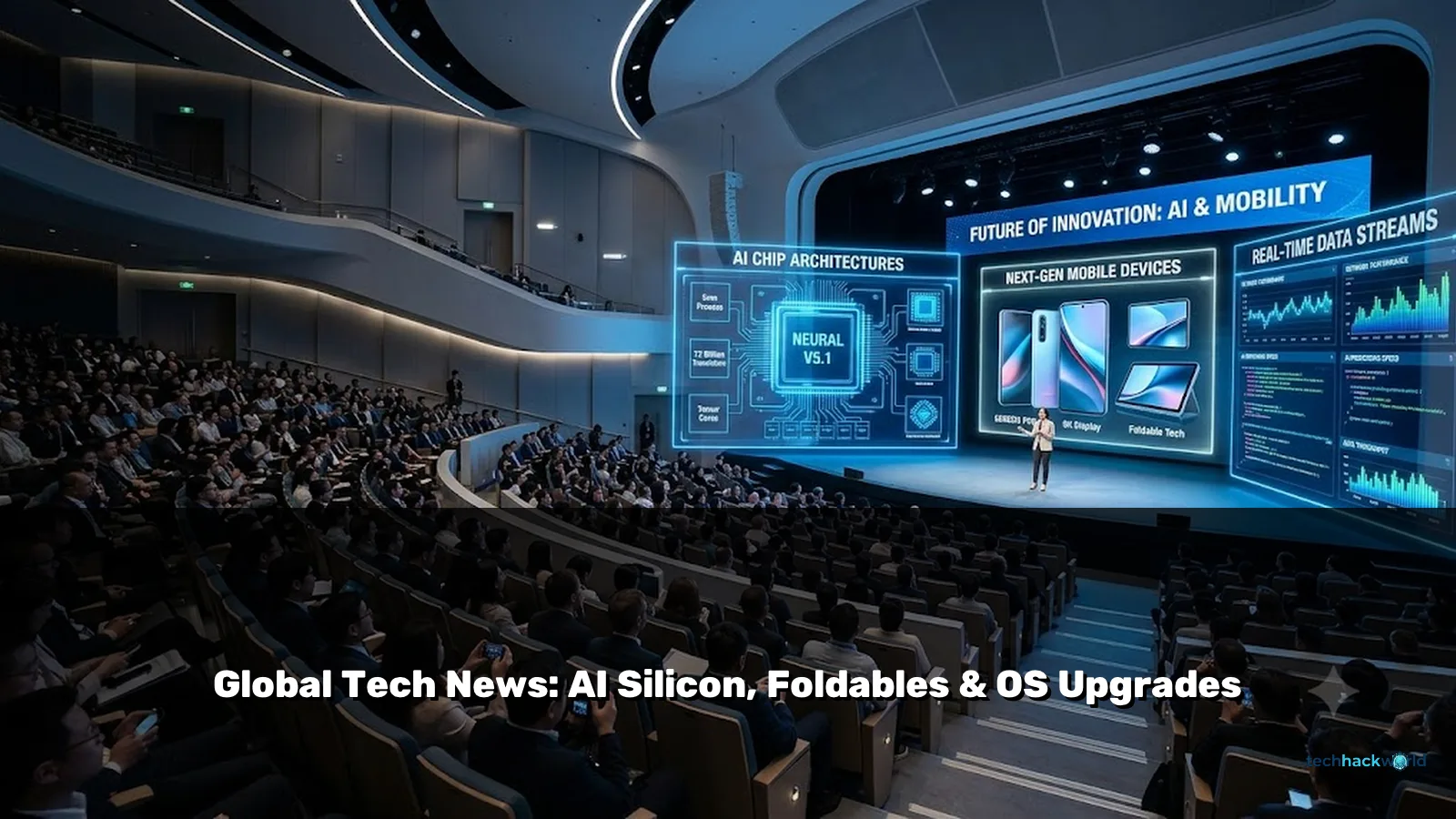
Today’s technology landscape experiences a massive leap across consumer hardware, operating systems, and global silicon supply chains. Tech giants are accelerating the deployment of specialized AI hardware, with next-generation NPU architectures redefining mobile computing and personal computer battery life. On the software front, major operating system updates from Apple, Google, and Microsoft are shifting towards privacy-centric on-device artificial intelligence. Simultaneously, tightening regulatory frameworks in Europe and shifts in global semiconductor manufacturing are restructuring how technological innovations reach consumer hands worldwide. Here is our expert breakdown of today’s most significant tech updates, hardware launches, and market developments.
Table of Contents
The global technology ecosystem is undergoing a dramatic paradigm shift. Artificial intelligence is no longer restricted to cloud data centers; it is moving directly into localized silicon embedded within smart rings, ultra-thin tri-fold smartphones, and next-generation personal computers. Consumers and enterprise buyers alike are witnessing an unprecedented convergence of hardware optimization, privacy-focused operating system design, and shifting geopolitical silicon strategies.
New Gadgets and Hardware Releases
The Rise of Commercial Tri-Foldable Smartphones
Flexible screen innovation has reached a pivotal milestone today with hardware makers moving past traditional clamshell and book-style foldables toward commercial tri-fold form factors. Leading manufacturers are introducing dual-hinge mechanisms that allow a standard 6.5-inch smartphone screen to unfold twice, expanding into a full 10-inch OLED tablet surface without compromising structural integrity.
Engineering breakthroughs in carbon-fiber hinge architecture have drastically reduced the visible crease depth while offering variable gear friction to support multi-angle desk setups. According to reporting from TechCrunch, consumer demand for hybrid productivity devices is pushing supply chains to optimize ultra-thin flexible glass (UTG) yield rates, paving the way for wider international availability over the coming quarters.
Advanced Wearables: The Next Frontier of Smart Rings
Biometric monitoring is rapidly shifting from wrist-worn devices toward miniature, ring-based form factors. Today’s newest smart rings feature medical-grade PPG (photoplethysmography) sensors, skin temperature telemetry, and electrodermal activity (EDA) monitoring embedded into hypoallergenic titanium alloy casings.
By leveraging custom sub-nanometer microcontrollers, these devices deliver 7 to 10 days of continuous health tracking on a single charge. The focus has decisively shifted toward predictive wellness metrics, using lightweight local AI algorithms to detect early markers of metabolic fatigue, sleep disruptions, and cardiovascular strain without constantly streaming raw sensitive telemetry back to cloud servers.
ARM-Based Copilot+ PCs and Next-Gen Silicon
Personal computing hardware continues its decisive shift toward high-efficiency ARM chipsets and neural processing units (NPUs). New laptop designs featuring system-on-chip (SoC) architectures delivering upwards of 45 TOPS (Trillions of Operations Per Second) are landing on consumer shelves. These machines enable continuous local execution of large language models, image processing, and real-time audio transcription directly on device, achieving battery life figures that comfortably exceed 20 hours of continuous productivity workloads.
Major Software and OS Updates
Privacy-First On-Device Mobile Intelligence
Operating system developers are executing significant software overhauls centered around privacy-preserving localized AI models. Mobile operating systems now incorporate zero-shot contextual awareness, allowing virtual assistants to parse personal emails, calendar events, local photographs, and real-time app interactions without uploading private user data to third-party endpoints.
Apple and Google have updated their respective developer guidelines, urging software creators to utilize native machine learning APIs. As documented by industry analysis on Reuters, regulators in the European Union and North America are scrutinizing data transmission practices, compelling software architectures to process user requests locally whenever technically feasible.
Desktop OS Restructuring and System Security
Desktop operating systems are receiving critical architectural updates aimed at sandboxing high-privilege system features. Microsoft’s ongoing revisions to Windows 11 feature refined security isolation protocols for system-level search tools, continuous local snapshot management, and background indexers.
Key software enhancements in today’s public rollouts include:
- Opt-In Telemetry and Recall Isolation: Cryptographically encrypted local storage for background system snapshots, requiring biometric authentication (Windows Hello) prior to data extraction.
- Modular Kernel Drivers: Migrating security monitoring tools out of the sensitive kernel space and into user space to minimize total system instability and blue-screen events.
- Native Multi-Model API Extensions: Direct OS-level support for running quantized open-source models (such as Llama 3 and Phi-3) via standard developer frameworks.
Global Tech Industry Shifts and Policy
Semiconductor Infrastructure and Foundry Dynamics
The global semiconductor supply chain is experiencing a structural realignment. Leading fabrication plants are ramping up high-yield production of 2-nanometer process nodes while deploying high-numerical aperture (High-NA) extreme ultraviolet (EUV) lithography systems supplied by ASML. This manufacturing evolution is critical to sustaining the exponential computational demands of modern generative model training and edge-computing efficiency.
Regulatory Compliance and Global AI Acts
Governmental enforcement regimes are actively reshaping how technology enterprises roll out artificial intelligence features across different geopolitical regions. With the gradual phase-in of the European Union’s AI Act, technological platforms are obliged to provide clear audit trails regarding training dataset sourcing, copyright compliance, and automated risk categorizations.
Consequently, multi-national tech conglomerates are adopting staggered regional release schedules. Advanced automated productivity features are increasingly launching first in North American and Asian markets, while European deployments undergo rigorous compliance validation to prevent regulatory fines.
Hardware Specifications Breakdown
To help visualize the current competitive landscape across next-gen personal computing chipsets, the table below compares key silicon architectures driving today’s market announcements.
| Processor Architecture | Process Node | NPU Performance (TOPS) | Primary Focus Area | Target Battery Life |
|---|---|---|---|---|
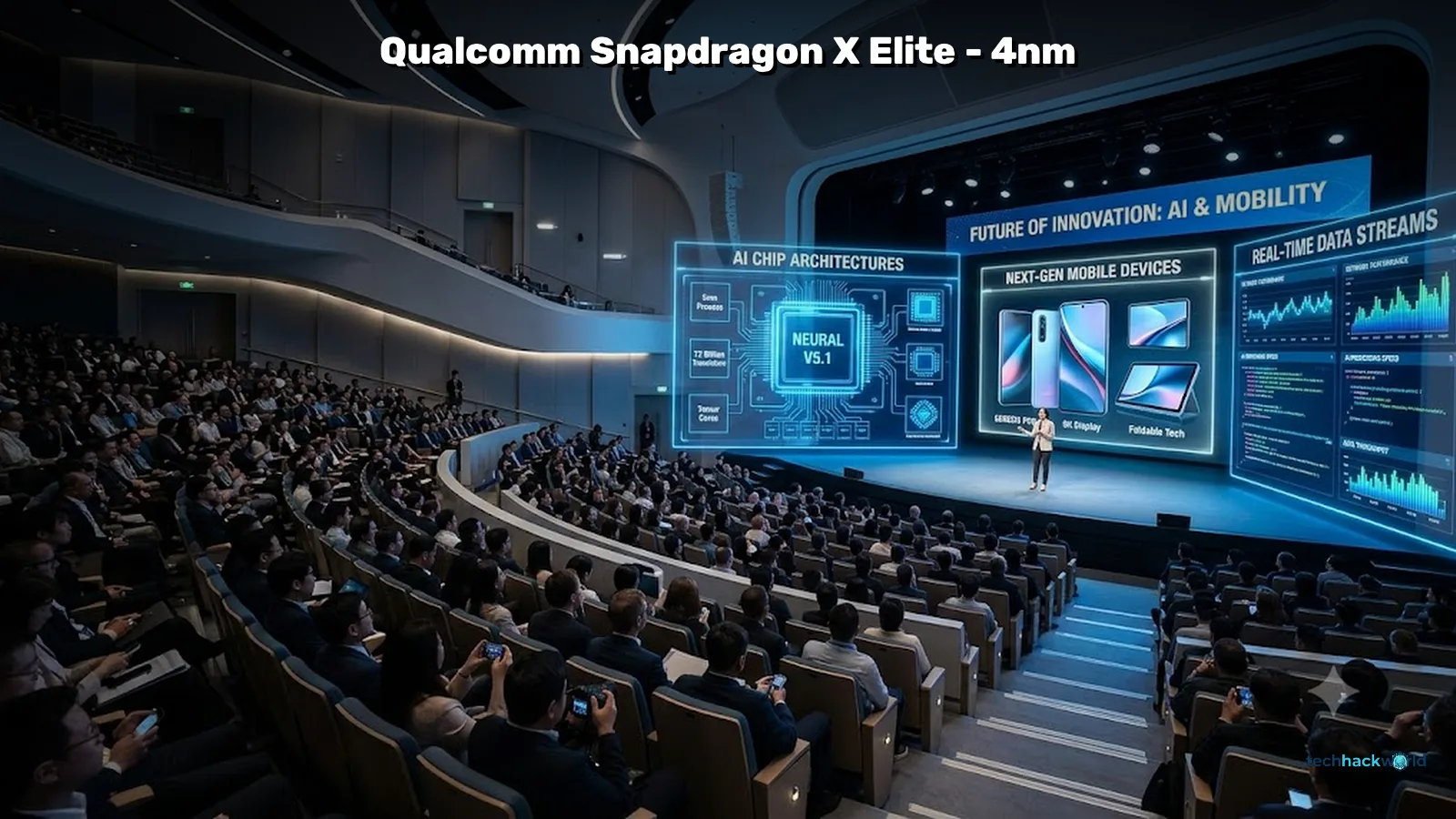
| Qualcomm Snapdragon X Elite | 4nm | 45 TOPS | ARM Ultraportables & Enterprise PCs | 18 – 22 Hours |
| Apple M4 Series | 3nm (TSMC N3E) | 38 TOPS | Creative Workstations & Premium Tablets | 18 – 20 Hours |
| Intel Lunar Lake (Core Ultra 2) | 3nm / 4nm Hybrid | 48 TOPS | x86 Thin-and-Light Laptops | 15 – 18 Hours |
| AMD Ryzen AI 300 Series | 4nm | 50 TOPS | High-Performance & Gaming Hybrid Laptops | 14 – 17 Hours |
Frequently Asked Questions
What is an NPU and why is it necessary for modern laptops?
A Neural Processing Unit (NPU) is a specialized microprocessor engineered specifically to accelerate mathematical calculations required for neural networks and machine learning algorithms. Unlike standard CPUs or GPUs, NPUs handle tasks like real-time background blur, local language model inference, and audio noise cancellation with minimal power draw, significantly extending battery life.
Are tri-foldable phones durable enough for daily enterprise use?
Recent iterations utilize multi-stage liquid metal hinges and dual-layer ultra-thin glass (UTG) to resist wear over hundreds of thousands of fold cycles. While shock-absorption ratings have improved substantially, consumer electronics manufacturers still recommend keeping these complex mechanical assemblies away from fine particles like sand or heavy liquid immersion.
How do smart rings compare to smartwatches for health tracking accuracy?
Smart rings collect optical biometric data directly from the arteries on the underside of the finger, where skin capillary density is higher than on the wrist. This allows for exceptionally accurate heart rate variability (HRV), blood oxygen, and sleep monitoring, though smartwatches remain superior for real-time display interaction and active GPS workout tracking.
Will old software apps run natively on new ARM-based Windows laptops?
Yes. Modern operating systems incorporate high-performance hardware emulation layers that translate legacy x86 and x64 instructions in real time. While native ARM64 applications deliver optimal speed and power savings, the vast majority of consumer productivity software runs smoothly under current emulation systems.