📌 Quick Summary
Today’s global technology landscape is experiencing a massive shift, driven by breakthroughs in AI-dedicated silicon, next-generation foldable mobile devices, and transformative operating system updates. Tech giants are expanding personal AI capabilities directly onto local hardware, reducing reliance on cloud computing while enhancing privacy and response speed. Concurrently, major software ecosystems are receiving critical zero-day security patches and generative AI interface overhauls. As regulatory scrutiny tightens across international markets, consumer electronics manufacturers are forced to balance rapid innovation with sustainable architecture and open silicon standards. Here is your definitive breakdown of today’s essential tech developments.
Table of Contents
The global technology sector is accelerating into a new era characterized by localized artificial intelligence, hyper-efficient hardware architectures, and increasingly unified software ecosystems. As hardware manufacturers transition from general-purpose computing to specialized neural processing, consumer devices are morphing into proactive, context-aware assistants.
Today’s announcements mark a pivotal moment for consumer electronics, software security, and enterprise infrastructure. Below, we examine the major developments shaping technology today across hardware releases, operating system patches, and macroeconomic industry movements.
Gadgets & Hardware Innovation
Edge AI and Next-Generation Mobile Silicon
The arms race for mobile silicon dominance reached a new milestone today as semiconductor leaders unveiled their latest system-on-chip (SoC) platforms. The primary focus of these new chips is not merely raw CPU clock speeds, but Neural Processing Unit (NPU) throughput measured in TOPS (Trillions of Operations Per Second). By pushing processing power directly to edge devices, chipmakers are drastically reducing latency for generative tasks such as real-time voice translation, video rendering, and context-aware predictive text.
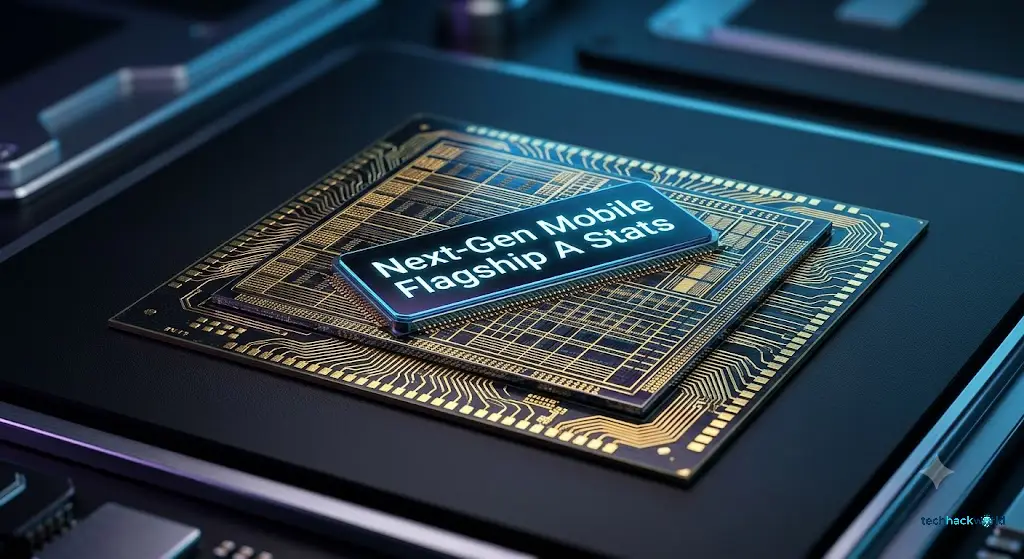
According to research highlighted by TechCrunch, local AI processing is quickly becoming the primary hardware differentiator for premium mobile devices. The latest 3nm fabrications allow transistors to operate at lower voltages while yielding up to a 20% increase in energy efficiency. This efficiency is critical for maintaining battery health during intensive AI inference workloads.
Foldable Displays and Spatial Computing Hardware
In the consumer device arena, display technology continues to evolve beyond traditional rigid glass form factors. Multiple manufacturers announced next-generation foldable and tri-fold smartphone concepts alongside consumer-tier smart glasses. Key improvements in this hardware generation include:
- Zero-Gap Fluid Hinges: Engineered using titanium alloys to eliminate screen creases while maintaining IP68 dust and water resistance ratings.
- Ultra-Thin Glass (UTG) 2.0: Improved structural durability reducing scratch vulnerability by up to 30%.
- Micro-OLED Spatial Displays: High-density panels achieving over 3,000 pixels per inch (PPI), designed for lightweight spatial audio and mixed-reality eyewear.
Smart glasses are gaining significant traction as display engines shrink. Rather than bulky headsets, the latest micro-LED waveguide glasses project heads-up notifications directly onto prescriptions lenses while weighing under 70 grams. These hardware improvements signal a gradual shift toward ambient computing, where digital context overlays physical reality without requiring full immersion.
Software & OS Ecosystem Updates
Mobile OS Refinements and Local AI Integration
Operating systems across mobile platforms are receiving major point releases designed to leverage new NPU hardware. Major updates rolling out today prioritize privacy-first generative features. Rather than routing personal telemetry, messages, and photos to cloud data centers, new OS frameworks process sensitive user data entirely within an isolated secure enclave on the device.
Features included in today’s mobile OS updates comprise:
- Contextual Notification Summarization: On-device LLMs curate priority alerts based on user behavior and schedule urgency.
- Real-Time Audio Transcription and Diarization: Live translation and speaker identification without an active internet connection.
- Generative Media Editing: In-line object removal and resolution upscaling natively integrated into systemic photo management apps.
Desktop Systems and Critical Security Patches
On the desktop side, both enterprise and consumer operating systems have received critical patch updates addressing several newly discovered zero-day vulnerabilities. Industry coverage from Reuters highlights that cyber defense agencies have urged immediate system patching due to actively exploited remote code execution (RCE) flaws in common graphics driver layers and web rendering engines.
System administrators are advised to roll out updates immediately to protect endpoints against memory overflow attacks. Furthermore, major desktop platforms are expanding support for Rust-based system modules, systematically replacing legacy C/C++ libraries to eliminate memory safety vulnerabilities at the architectural level.
Global Tech Industry Shifts
Data Center Energy and Infrastructure Constraints
As the demand for generative models scales exponentially, the infrastructure supporting these tools faces severe resource bottlenecks. Hyperscale data center operators are encountering unprecedented energy requirements, prompting massive investments into nuclear energy, cooling tech, and localized energy storage.
Liquid cooling and direct-to-chip microfluidics are rapidly transitioning from niche high-performance computing solutions into baseline requirements for modern server racks. Without these advancements, thermal throttling significantly degrades server performance while driving up municipal power demands.
Regulatory Pressure and Open Frameworks
Global regulatory oversight remains a dominant driver of technological architecture. Market adjustments in response to European and North American antitrust enforcement are forcing proprietary tech ecosystems to adopt open standards. Developers can monitor updates directly via Microsoft’s Official Blog and Apple Developer Portal to observe how platforms are adapting to inter-operability mandates.
Key regulatory shifts impacting software design include:
- Mandatory third-party application store support across major mobile ecosystems.
- Standardized side-loading APIs for enterprise management tools.
- Stricter transparency rules regarding training data sources for commercial AI models.
Hardware Specifications Comparison
To contextualize today’s hardware releases, the table below provides a side-by-side technical specification comparison of key flagship processors powering late-2024 and early-2025 consumer devices.
| Processor Platform | Fabrication Process | NPU Performance (TOPS) | Max Clock Speed | Primary Target Device |
|---|---|---|---|---|
| Next-Gen Mobile Flagship A | 3nm TSMC (N3E) | 45 TOPS | 4.32 GHz | Premium Smartphones |
| Next-Gen Mobile Flagship B | 3nm TSMC (N3P) | 50 TOPS | 4.40 GHz | Foldables & Ultra-Portables |
| Spatial Compute Chip Set | 4nm Custom | 32 TOPS | 3.80 GHz | MR & Smart Eyewear |
| Desktop/Laptop AI Processor | 3nm Architecture | 60 TOPS | 5.10 GHz | AI Workstations & Laptops |
Frequently Asked Questions
Why is on-device AI preferred over cloud-based AI processing?
On-device AI offers three main advantages: speed, reliability, and privacy. Because processing occurs directly on the hardware’s NPU, latency is reduced significantly. Additionally, features work offline without relying on network coverage, and personal data never leaves the device, mitigating privacy risks associated with cloud transmission.
What does NPU performance measured in TOPS actually mean for consumers?
TOPS stands for Trillions of Operations Per Second. It measures the raw processing capacity of a chip’s Neural Processing Unit. Higher TOPS values mean the device can process larger, more complex AI models natively, translating to faster background photo processing, real-time voice recognition, and smarter predictive capabilities without draining battery life.
How are new thermal management techniques helping foldable phones?
Foldable phones have limited internal real estate for heat dissipation. New vapor chamber designs combined with graphite cooling layers help spread thermal load evenly across both sides of the hinge. This prevents thermal throttling, maintaining optimal CPU and GPU performance during extended gaming or processing tasks.
Why are software vendors shifting system components to the Rust programming language?
Rust provides compile-time memory safety without requiring a garbage collector. By replacing legacy codebases written in C or C++ with Rust, software developers can automatically eliminate common security vulnerabilities like buffer overflows and double-free errors, vastly improving software reliability and OS security.