
📌 Quick Summary
Today’s global technology report highlights major transformations across personal electronics, software ecosystems, and enterprise infrastructure. Leading semiconductor manufacturers have revealed next-generation neural processing units designed to run generative models natively on ultra-thin laptops and mobile devices. Concurrently, major operating systems are rolling out systemic architectural overhauls that integrate contextual intelligence while enforcing strict zero-trust privacy frameworks. On the hardware front, foldable displays and spatial computing gear continue to mature into mainstream productivity tools. Dive into our comprehensive analysis covering device specifications, OS patches, enterprise dynamics, and industry shifts defining the tech sector today.
Table of Contents
New Gadgets and Hardware Innovations
The consumer electronics market is undergoing a massive shift as hardware vendors prioritize native artificial intelligence compute power over simple clock-speed bumps. Today’s major announcements showcase an unprecedented push toward bringing workstation-class matrix multiplication directly to mobile processors and sleek form factors.
Next-Generation AI Laptops and On-Device Silicon
Leading PC manufacturers have officially launched their latest lineup of thin-and-light notebooks equipped with dedicated Neural Processing Units (NPUs) delivering over 45 TOPS (Trillions of Operations Per Second). These new architectures allow users to run complex 7-billion to 13-billion parameter Large Language Models (LLMs) locally without relying on cloud infrastructure. By executing inference locally, these devices eliminate network latency and ensure sensitive user data never leaves the local SSD storage.
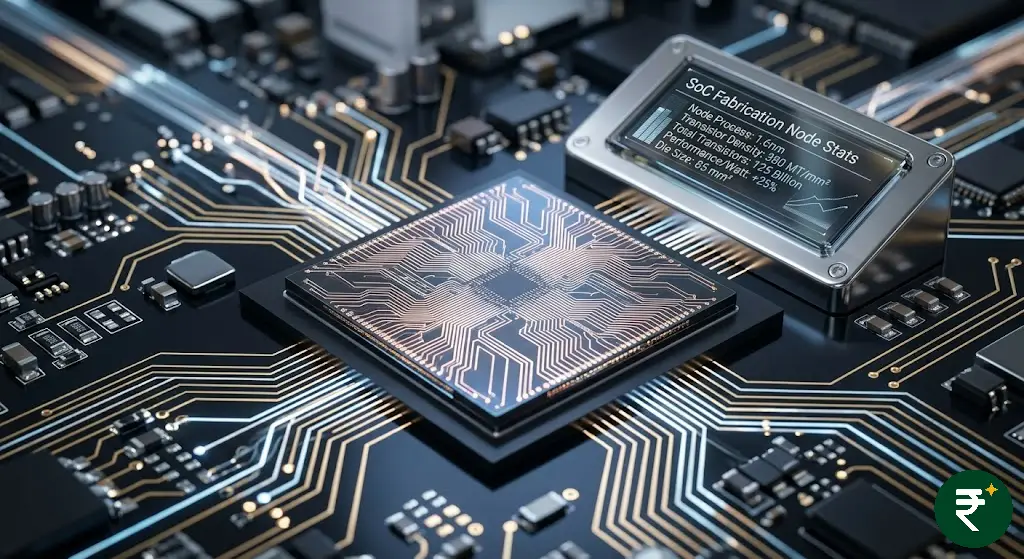
Key hardware innovations released today focus heavily on thermal efficiency and battery endurance. Fabricated on advanced 3-nanometer nodes, these system-on-chips (SoCs) achieve multi-day battery life while supporting high-bandwidth unified memory structures essential for real-time video generation and dynamic audio processing.
Premium Foldables and Spatial Computing Wearables
In the smartphone category, the latest generation of foldable devices has officially hit store shelves, featuring revised dual-rail hinge mechanisms that virtually eliminate the center display crease. Utilizing ultra-thin glass (UTG) advancements and carbon-fiber structural plates, these foldables achieve thickness profiles under 10 millimeters when closed, rivaling traditional glass-slab flagships.
Simultaneously, spatial computing continues to expand its enterprise footprint. Today saw the announcement of lightweight mixed-reality (MR) headsets designed specifically for industrial engineering, surgical planning, and remote collaborative design. Featuring dual 4K micro-OLED panels and sub-millimeter eye-tracking cameras, these devices bridge the gap between virtual prototyping and real-world execution.
| Device Category | Key Hardware Advancement | Primary Processor / NPU | Target Market Segment |
|---|---|---|---|
| Copilot+ Laptops | Unified Architecture, 45+ NPU TOPS | Qualcomm Snapdragon X Elite / Intel Lunar Lake | Mobile Professionals & Creators |
| Ultra-Slim Foldables | Dual-Rail Carbon Hinge, IPX8 Water Resistance | Snapdragon 8 Gen 3 for Galaxy | Premium Smartphone Market |
| Enterprise MR Headsets | Dual 4K Micro-OLED, Passthrough Latency < 12ms | Custom Spatial Processing Unit | Industrial & Healthcare Enterprises |
For official product documentation and technical whitepapers regarding mobile processor performance, developers can review detailed benchmarks on Qualcomm’s Official Developer Portal.
Software and Operating System Updates
Software ecosystems are adapting rapidly to leverage new underlying silicon architectures. Today marks the general availability of critical operating system updates across mobile, desktop, and cloud environments, focusing heavily on privacy-centric ambient intelligence and kernel-level optimizations.
Next-Gen Mobile OS Architecture with Local Intelligence
The latest updates to primary mobile operating systems introduce systemic rewrites to background processing daemons. Instead of relying on full cloud-roundtrips for basic virtual assistant tasks, the updated mobile platforms use lightweight, quantized local models to index system-wide content. Photos, messages, calendar entries, and document transcripts are indexed securely within an encrypted on-device semantic engine.
Furthermore, security updates published today address high-severity memory safety vulnerabilities. OS developers have implemented stricter memory-safe programming languages (such as Rust) into core system services, drastically reducing zero-day exploit surfaces in system Bluetooth and Wi-Fi stacks. For detailed vulnerability disclosure reports, engineers can consult the security bulletins hosted by Android Open Source Project Security Bulletins.
Desktop Ecosystems Shift Toward Intelligent Workflows
On the desktop front, operating system updates have added native window management utilities, deep contextual search integration, and containerized app execution environments. Developers now gain native command-line access to on-device NPUs via standardized API abstraction layers, enabling seamless integration of local AI features across third-party productivity tools.
- Contextual Action Center: Suggests automated macros based on real-time screen content parsing without transmitting frame data off-device.
- Granular Privacy Controls: Users can view real-time telemetry graphs showing exactly which applications are accessing local NPU and camera hardware.
- Improved Dynamic Refresh Rate Scaling: Updated display pipeline engines optimize panel refresh rates down to 1Hz during static text rendering, saving up to 15% overall display power draw.
Tech Industry Shifts and Market Trends
Beyond consumer tech and software patches, macroeconomic and supply chain transformations continue to re-shape the global technology landscape. Today’s industry reports reveal significant shifts in chip fabrication foundries, cloud data center expansions, and regulatory compliance requirements.
Semiconductor Fabrication and Foundry Dynamics
The race to secure sub-2nm process nodes has intensified. Global foundries are ramping up commercial production using Gate-All-Around (GAA) nanosheet transistor architectures. This fundamental design departure from FinFET technology allows chipmakers to increase electrostatic control, driving down power consumption while packing tens of billions of additional transistors into identical die footprints.
At the same time, regional semiconductor manufacturing initiatives are yielding tangible results. New fabrication facilities across North America and Europe have officially entered their risk-production phases, designed to diversify the high-tech supply chain and cushion automotive and consumer tech sectors against geopolitical disruptions. Up-to-date industry analysis regarding international trade and technology supply lines can be tracked through Reuters Tech & Media Coverage.
Enterprise Cloud & Data Center Expansion
Hyperscale cloud providers are executing massive capital expenditures to overhaul existing data center facilities. Traditional CPU-centric server racks are systematically being replaced or retrofitted with liquid-cooled accelerator clusters built to handle high-density model training and real-time inference loads.
This hardware shift has driven a parallel surge in sustainable energy investments. Cloud giants are securing direct power purchase agreements (PPAs) for nuclear, geothermal, and solar energy to offset the high thermal and electric demands of modern computing centers. Additional insights on technology infrastructure trends are published regularly by the TechCrunch Enterprise Analysis Section.
Frequently Asked Questions
How do on-device AI processors differ from traditional CPUs and GPUs?
While CPUs are optimized for sequential, general-purpose processing and GPUs excel at parallel graphic rendering, Neural Processing Units (NPUs) are specifically engineered for tensor and matrix mathematics. NPUs handle complex mathematical operations (such as scalar-matrix multiplication) required by deep learning models at significantly lower energy levels than standard processors.
Are foldable smartphones durable enough for daily multi-year use?
Yes. Contemporary foldable smartphones incorporate structural improvements such as flexible ultra-thin glass layers, shock-absorbing display sub-plates, and dust-resistant hinge enclosures rated for over 200,000 to 500,000 fold cycles, equivalent to several years of heavy everyday usage.
What are the battery life trade-offs associated with local AI execution?
Running generative AI tasks natively consumes significant computational resources. However, modern NPUs execute these tasks far more efficiently than CPUs or GPUs. While sustained local execution will drain battery faster than basic standby tasks, it avoids continuous battery consumption caused by maintaining high-speed cellular or Wi-Fi data transmissions to cloud servers.
How do recent mobile OS updates enhance user data privacy?
Recent mobile OS updates utilize on-device semantic indexes and federated learning mechanisms. Sensitive personal data—such as personal messages, search histories, and biometrics—is processed locally within hardware-isolated secure enclaves, ensuring your raw data is never uploaded to third-party cloud servers for processing.