📌 Quick Summary
Today’s global technology landscape is undergoing a massive transformation driven by localized artificial intelligence, next-generation silicon architectures, and major operating system overhauls. Hardware manufacturers are moving away from cloud-dependent computing toward on-device neural processing units (NPUs), enabling unprecedented speed and privacy for consumer electronics. Meanwhile, major software platforms are integrating generative features directly into core system layers, reshaping user interactions across mobile, desktop, and spatial computing environments. In this news report, we analyze the most significant gadget unveilings, OS patches, enterprise hardware shifts, and consumer tech trends defining the global ecosystem today.
Table of Contents
The global technology ecosystem is moving at a breakneck pace. As consumer demand for real-time artificial intelligence capabilities skyrockets, hardware OEMs (Original Equipment Manufacturers) and software architects are aligning their product roadmaps around a singular concept: ubiquitous, localized AI acceleration. From handheld flagship smartphones pushing the boundaries of neural processing to enterprise-grade server infrastructure transitioning toward sub-2nanometer manufacturing processes, today’s news cycle represents a pivotal turning point for digital technology.
In this comprehensive report, we break down the latest consumer hardware launches, crucial software updates, security vulnerabilities, and macroeconomic shifts reshaping tech hubs from Silicon Valley to Shenzhen.
Next-Gen Hardware & Gadget Releases
The flagship consumer hardware market is witnessing a fundamental shift in design philosophy. Rather than competing solely on raw clock speeds or camera megapixel counts, hardware makers are prioritizing efficiency, sustained thermal performance, and dedicated neural compute blocks. Today’s major unveilings illustrate how consumer hardware is evolving to support complex localized machine learning models directly on device.
The On-Device AI Revolution in Smartphones
Leading smartphone manufacturers have officially pulled back the curtain on their latest flagship tiers. The core differentiator this generation lies within dedicated Neural Processing Units (NPUs) capable of operating at over 45 TOPS (Trillions of Operations Per Second). This hardware benchmark enables devices to run multimodal large language models locally, bypassing cloud latency and eliminating data privacy concerns.
Industry coverage from TechCrunch highlights how these specs translate into tangible consumer experiences: instantaneous generative photo editing, off-line voice transcription with real-time translation, and context-aware predictive text engines integrated into native messaging applications.
| Specification | Next-Gen Flagship Standard | Previous Generation Baseline | Key Benefit |
|---|---|---|---|
| SoC Fabrication Node | 3nm / 2nm Class Process | 4nm Process | 30% higher power efficiency, reduced thermal throttling |
| NPU Compute Capability | 45 – 50 TOPS | 15 – 25 TOPS | Enables native on-device LLM inference without cloud connection |
| Display Technology | LTPO OLED (1-120Hz, 3000+ nits) | Standard LTPS OLED (120Hz max) | Enhanced outdoor readability and dynamic refresh battery savings |
| Base RAM Configuration | 12GB – 16GB LPDDR5X | 8GB LPDDR5 | Required memory bandwidth to keep AI models resident in RAM |
Next-Gen Wearables & Spatial Audio Gear
Beyond traditional mobile form factors, smart wearables are receiving substantial structural upgrades. Today’s product drops show a heavy emphasis on health monitoring micro-sensors and biometric arrays. New smartwatch lines incorporate continuous glucose monitoring research algorithms, skin temperature fluctuation warnings, and advanced ECG telemetry built into lightweight titanium and ceramic casings.
In the spatial computing and audio sector, true wireless stereo (TWS) earbuds are receiving dedicated low-power digital signal processors (DSPs). These upgraded processors permit active noise cancellation (ANC) algorithms to dynamically sample environmental acoustics up to 80,000 times per second, delivering adaptive sound stages tailored to specific acoustic environments.
Software Breakthroughs & OS Updates
Hardware is only as powerful as the code that controls it. Today’s software update rollouts highlight a aggressive shift across major mobile, desktop, and embedded operating systems. Developer teams are rolling out system-level frameworks designed to bridge consumer software with decentralized, secure, and intelligent backend services.
System-Level AI Integration in Mobile & Desktop OS
Both desktop and mobile operating system vendors have issued major point-releases today. The most notable architectural change is the deep integration of system-level generative AI APIs. Developers can now tap directly into native system neural engines without bundling massive proprietary models inside individual application packages.
According to analysis featured on Wired, this unified software framework dramatically reduces app footprint sizes while giving third-party software creators seamless access to system-level text generation, image vectorization, and voice synthesis.
Key features rolled out in today’s operating system patches include:
- Unified Semantic Search: Operating systems can now index file contents, audio transcriptions, and image metadata locally, allowing users to search using natural language context (e.g., “Find the document where I discussed quarterly marketing budgets last month”).
- Contextual Task Automation: Background system processes learn user workflow habits, automatically grouping browser tabs, drafting contextual email responses, and suggesting relevant system utilities.
- Granular Data Isolation Control: A newly introduced security dashboard gives users real-time visibility into which applications are querying on-device AI processors, preventing unauthorized background profiling.
Critical Cybersecurity Patches & Enterprise System Updates
Alongside feature-rich system updates, security researchers and enterprise systems administrators face an urgent patching window today. Multiple zero-day vulnerability disclosures have prompted vendor updates across desktop OS installations, web browsers, and containerized cloud environments.
Reporting by Reuters Technology indicates that cybersecurity infrastructure standards are being tightened globally to counter modern memory-safety exploits. IT administrators are strongly advised to deploy patch clusters immediately, focusing on memory management vulnerabilities within graphics pipeline components and network stack drivers.
Silicon Dynamics & Global Tech Industry Shifts
The economic foundation of the entire technology sector relies heavily on semiconductor manufacturing and supply chain agility. As tech giants move toward proprietary chip designs tailored specifically for cloud datacenters and consumer hardware, global foundry strategies are adapting rapidly.
The Race for Sub-2nm Semiconductor Architecture
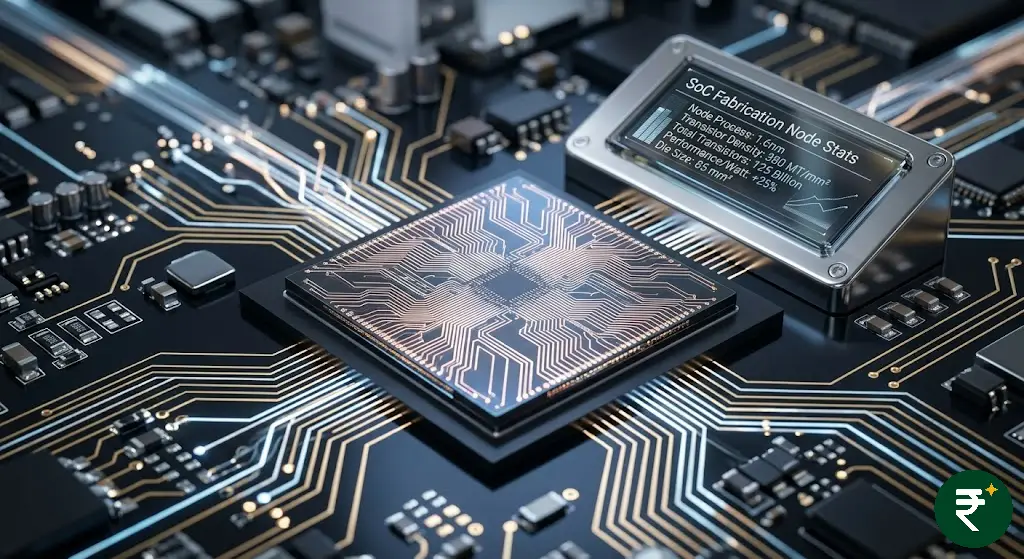
The transition from 3nm to sub-2nm process nodes marks one of the most technically complex engineering challenges in human history. Pure-play foundries are accelerating their implementation of High-NA EUV (High Numerical Aperture Extreme Ultraviolet) lithography machines. These ultra-precise manufacturing tools allow engineers to print circuit features at scales previously deemed physically impossible without quantum interference issues.
This semiconductor evolution is driving massive capital expenditure shifts. Fab facilities in East Asia, Europe, and North America are racing to finalize production lines aimed at mass producing sub-2nm wafers within the coming fiscal quarters. The resulting chips will power the next generation of hyperefficient datacenter accelerators, autonomous vehicle navigation rigs, and consumer wearables.
Enterprise Cloud Expansion & Local Data Sovereignty
On the infrastructure front, cloud service providers (CSPs) are re-architecting their global server networks. Driven by dynamic local data protection mandates across international markets, tech providers are moving away from centralized monolithic data facilities toward distributed regional zones.
These localized data centers are built with custom AI acceleration hardware, allowing enterprise clients to train models and execute workload operations while keeping sensitive user data strictly within national geographic boundaries. This architectural transformation addresses growing regulatory oversight while simultaneously lowering latency for end-users relying on real-time web applications.
Frequently Asked Questions
What is an NPU and why is it essential for new devices?
A Neural Processing Unit (NPU) is a specialized microprocessor optimized specifically for accelerating machine learning algorithms and neural network computations. Unlike general-purpose CPUs or graphics-heavy GPUs, NPUs handle complex mathematical matrix operations extremely efficiently, allowing devices to run advanced artificial intelligence features locally without draining battery life or sending personal data to external cloud servers.
How do local on-device AI models differ from cloud-based AI like ChatGPT?
Cloud-based AI models rely on remote servers equipped with massive datacenter infrastructure to process queries, which requires an active internet connection and can introduce minor latency or data privacy risks. On-device AI models are smaller, highly optimized versions that live directly on your phone or laptop. They run offline, deliver near-instant response times, and keep your personal information completely private on your hardware.
Why are technology manufacturers emphasizing sub-2nm chip architecture?
Shrinking the nanometer size of transistor channels on a silicon chip allows engineers to pack billions more transistors into the exact same physical area. This reduces the distance electrical signals must travel, resulting in substantially faster processing speeds and dramatically lower power consumption. Sub-2nm chips are vital for sustaining long-term advancements in high-performance computing, mobile devices, and AI infrastructure.
Should consumer tech users install today’s software updates immediately?
Yes. Today’s software rollouts contain essential security updates that patch active zero-day memory vulnerabilities alongside delivering new consumer features. Keeping your mobile devices, desktop operating systems, and web browsers updated to the latest build versions is the single most effective defense against unauthorized access and malware threats.